Short-sightedness in children: signs, eye tests and glasses
The signs that a child may be short-sighted, when it usually starts, what an eye test involves and how to help a child with new glasses.
- Verfasst von
- HealthNaro Editorial Team
- Veröffentlicht
How this page was made: Drafted by the HealthNaro Editorial Team with AI assistance, checked against reputable health sources, and not yet clinically reviewed. Editorial policy
Noch nicht klinisch geprüft
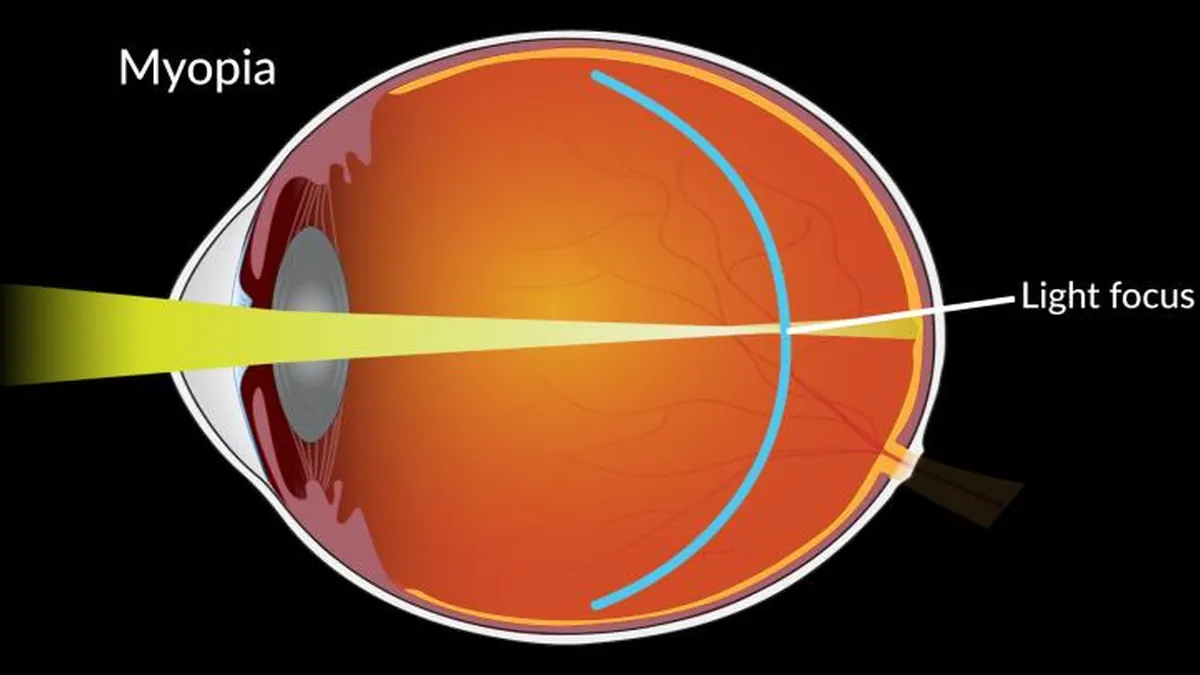
Many parents first suspect short-sightedness (myopia) when a child squints at the whiteboard, sits close to the television or complains of headaches. It is a very common eye condition and glasses or contact lenses usually correct it. This post explains the signs, when it tends to start, what an eye test involves and how to look after a child who needs glasses.
The short answer
- Short-sightedness means distant objects look blurred while near objects are clear.
- The NHS says it usually starts in children between the ages of 6 and 13, but can also develop in adults.
- It often runs in families and can get worse until the eye has stopped growing, usually around the age of 20.
- If you notice signs, book an eye test with an optometrist. The NHS suggests an eye test if you or your child has not had one for two years.
Signs to look for
The NHS lists these signs:
- difficulty reading words from a distance, such as the school board
- sitting close to the television or a computer, or holding a phone or tablet close to the face
- headaches
- rubbing the eyes a lot
Children rarely say that they cannot see. They may think everyone sees as they do. Teachers sometimes notice first, for example if a child squints or loses their place when copying from the board. If a child's schoolwork or behaviour seems to change, an eye test is a simple thing to rule out.
What an eye test for a child involves
An optometrist will usually do the test. A child will be asked to look at a light or read letters or pictures on a chart while different lenses are placed in front of the eyes. For younger children, tests use pictures and shapes rather than letters. The optometrist may use drops so they can see the back of the eye more clearly, and the NHS says these are used to check the health of the eyes.
If glasses are needed, you will be given a prescription, which you can take to any optician. Ask for a copy for your records. Our eye test and glasses guide describes the steps, and the eye examination service and spectacles and contact lenses pages give an overview of the services. If you are unsure which professional to see, our post on optometrists and ophthalmologists explains.
Glasses, contact lenses and other options
The NHS says short-sightedness can usually be treated with glasses or contact lenses. Glasses suit children and adults. Contact lenses suit adults and some children, and your optometrist will advise on what is suitable. If a child wears lenses, careful cleaning is essential, and our post on how to care for contact lenses covers the basics.
The NHS says laser and lens surgery can be used to improve sight in some adults. It is not available on the NHS and can be expensive.
Can short-sightedness be slowed?
The NHS says it is not clear why short-sightedness happens and it is hard to prevent. Some things may help stop it getting worse, including spending more time outdoors. Some eye services offer special lenses or drops intended to slow progression in children. Ask your optometrist or ophthalmologist what is available locally and what the evidence is, and be cautious about any claim that promises to stop it.
Why correct it
Beyond comfort and learning, the NHS says young children with uncorrected short-sightedness may be more likely to develop a squint, where the eyes point in different directions, or a lazy eye, where sight in one eye does not develop properly. Some adults with severe short-sightedness are more likely to develop glaucoma, a detached retina, cataracts or macular degeneration, which is why regular eye checks matter through life.
Helping a child with new glasses
- Let them choose a frame they like, so they are more likely to wear it.
- Explain that glasses help them see, and are not a punishment.
- Ask the optician to adjust the fit, since a loose frame slides and gets pushed up.
- Tell the school, so the teacher knows to seat the child suitably and encourage wearing the glasses.
- Keep a spare prescription copy.
- Book follow-up tests when advised, as the prescription can change as the child grows.
Costs and help
Costs and funding vary widely by country. In England, for example, the NHS says eye tests are free for children under 16 and for some others, and that children can receive a voucher towards glasses. Elsewhere, you may pay in full or have cover through insurance or a public scheme. Ask before booking what the test and any glasses are likely to cost. Our guide to SHA dental and optical cover in Kenya explains one example.
Frequently asked questions
Does reading in dim light damage a child's eyes?
The sources we reviewed do not say it causes lasting damage. Good light is more comfortable. If a child complains of tired eyes, an eye test is sensible.
Will my child grow out of it?
The NHS says short-sightedness can get worse until the eye stops growing, usually around age 20. It does not normally go away.
How often should a child have an eye test?
Follow your optometrist's advice. The NHS advises going to an optician if there are signs or if there has been no test for two years.
Is it the screens?
The causes are not fully understood. Time outdoors may help, according to the NHS. Our post on digital eye strain discusses screen discomfort.
General information only
This article is general information, not medical advice. If a child has sudden loss of vision, an eye injury, a curtain across the sight or severe eye pain, seek urgent medical care. You can send an inquiry to ask for help finding an optometrist.
Wenn Sie glauben, einen medizinischen Notfall zu haben, kontaktieren Sie sofort den örtlichen Notdienst oder gehen Sie in die nächste Notaufnahme. Warten Sie nicht auf die Antwort eines Verzeichniseintrags.
Brauchen Sie Hilfe bei der Suche nach einem Anbieter?
Sagen Sie uns, was Sie brauchen und wo. Wir melden uns bei Ihnen, verstehen Ihre Situation und helfen Ihnen, eine geeignete Klinik zu finden und auszuwählen. Dieser Service ist für Patienten kostenlos.
Mehr aus dem Blog
-
Blogbeitrag
Floaters and flashes in the eye: what is normal and what is urgent
What eye floaters and flashes are, why most are harmless, and the signs of a torn or detached retina that need urgent attention.
5 November 2026
-
Blogbeitrag
Red eye: common causes and when to see a doctor
What commonly makes an eye red, how to look after a mild case, and the signs of pain, light sensitivity or vision change that need urgent care.
4 November 2026
-
Blogbeitrag
Digital eye strain: why screens tire your eyes and what helps
What causes tired, dry or blurry eyes after screen use, practical steps from the American Academy of Ophthalmology, and when to book an eye test.
3 November 2026