Hives: how long do they last and when to get help
What a hives rash looks like, how long it usually lasts, what a pharmacist can help with and the signs that need urgent or emergency care.
- Verfasst von
- HealthNaro Editorial Team
- Veröffentlicht
How this page was made: Drafted by the HealthNaro Editorial Team with AI assistance, checked against reputable health sources, and not yet clinically reviewed. Editorial policy
Noch nicht klinisch geprüft
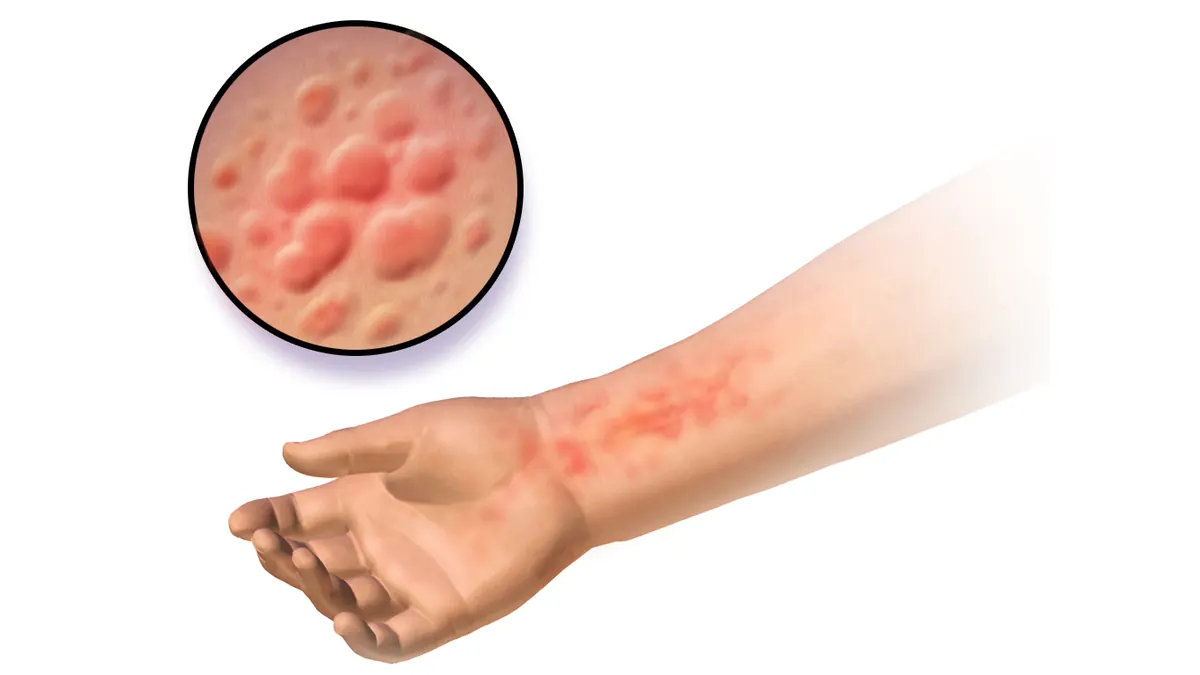
Hives, also called urticaria, are an itchy rash of raised bumps or patches that can appear suddenly and move around the body. They are alarming to look at and uncomfortable, yet the NHS says hives usually get better within a few days and can often be treated yourself. The important skill is knowing when hives are part of something more serious. This post explains what hives look like, how long they usually last and the signs that need urgent care.
The short answer
- Hives is an itchy rash that can feel like itching, stinging or burning. It can be raised bumps or patches in many shapes and sizes, anywhere on the body.
- The NHS says hives rashes usually get better within a few days.
- A pharmacist can give advice about antihistamine treatment.
- Ask for an urgent appointment if hives do not improve after 2 days, keep coming back, spread, or come with fever or swelling under the skin. Call emergency services if there is swelling of the lips, mouth, throat or tongue, or any difficulty breathing.
What hives look like
The NHS describes the rash as:
- raised bumps or patches in many shapes and sizes
- on one area, or spread across the body
- itchy, stinging or burning
- pink or red on white skin, but the colour can be harder to see on brown and black skin
On brown and black skin, you may notice the raised areas more by touch than by colour. The NHS images show hives the same colour as the surrounding skin or slightly darker.
If you are not sure it is hives, the NHS has a page about other rashes in babies and children, and conditions such as eczema, scabies and contact dermatitis can also cause an itchy rash. Our posts on contact dermatitis and scabies describe them.
How long do hives last
The NHS says hives rashes usually get better within a few days. If symptoms do not improve after 2 days, or if hives keep coming back, the NHS advises asking for an urgent appointment or help from a health helpline, because you may be allergic to something. A doctor can look for a trigger and decide on treatment. If hives do not go away with treatment, a doctor may refer you to a skin specialist (dermatologist).
What to do at home
- Speak to a pharmacist about antihistamine treatment. Tell them about any long-term conditions you have, because you might not be able to take antihistamines, and note that this treatment might not be suitable for young children. Follow the leaflet and do not exceed what the pharmacist advises.
- Avoid scratching, which can break the skin.
- Think about what you ate, took or touched shortly before the rash started, and note it down. This helps if a doctor asks.
Do not start a new medicine or supplement without checking with a pharmacist if you are unsure of its safety for you.
Warning signs
Ask for an urgent GP appointment or call a health helpline if
- symptoms do not improve after 2 days
- you are worried about your child's hives
- the rash is spreading
- hives keep coming back
- you also have a high temperature and feel unwell
- you also have swelling under your skin, which might be angioedema
Call emergency services if
The NHS says to call 999 (or your local emergency number) if:
- your lips, mouth, throat or tongue suddenly become swollen
- you are breathing very fast or struggling to breathe, perhaps wheezy or feeling like you are choking
- your throat feels tight or you are struggling to swallow
- your skin, tongue or lips turn blue, grey or pale
- you suddenly become very confused, drowsy or dizzy
- someone faints and cannot be woken
- a child is limp, floppy or not responding as they normally do
These can be signs of a serious allergic reaction that may need immediate treatment in hospital. If someone has been prescribed an adrenaline auto-injector, they should use it as instructed and call for help.
What a doctor may do
The NHS says a GP might prescribe menthol cream, antihistamines or steroid tablets. They may ask about triggers, medicines and illnesses and, if hives continue, arrange tests or referral. Keep a record of when each episode starts, how long it lasts and what you had been doing. Photographs of the rash are helpful since hives can fade before your appointment.
For how a skin visit works, see our guide to a dermatology consultation, the skin consultation service page and the dermatology topic. You can also send an inquiry if you want help finding a clinic.
Frequently asked questions
Are hives contagious?
Hives themselves are not passed from person to person. An infection that triggers them might be, so follow general hygiene advice.
Can stress cause hives?
The NHS page we reviewed does not list stress as a cause. A doctor can discuss triggers with you.
Are hives always an allergy?
No. The NHS says that if hives keep coming back you may be allergic to something, but it does not say all hives are allergic.
Should I go to hospital for hives?
Only if you have the emergency signs listed above, such as swelling of the throat or tongue or trouble breathing.
General information only
This article is general information, not medical advice. If you have swelling of the lips, mouth, throat or tongue, or any difficulty breathing, call emergency services immediately.
Wenn Sie glauben, einen medizinischen Notfall zu haben, kontaktieren Sie sofort den örtlichen Notdienst oder gehen Sie in die nächste Notaufnahme. Warten Sie nicht auf die Antwort eines Verzeichniseintrags.
Brauchen Sie Hilfe bei der Suche nach dermatology?
Sagen Sie uns, was Sie brauchen und wo. Wir melden uns bei Ihnen, verstehen Ihre Situation und helfen Ihnen, eine geeignete Klinik zu finden und auszuwählen. Dieser Service ist für Patienten kostenlos.
Mehr aus dem Blog
-
Blogbeitrag
How to use sunscreen: SPF, star ratings and how much to apply
What SPF and UVA star ratings mean, how much sunscreen adults are advised to apply, when to reapply and what else protects your skin.
6 November 2026
-
Blogbeitrag
Acne in adults: what helps and when to see a doctor
What acne looks like, the everyday steps the NHS suggests, how a pharmacist can help and when a doctor or dermatologist can offer more.
5 November 2026
-
Blogbeitrag
When to worry about a mole: changes to check and when to see a doctor
What a typical mole looks like, the changes the NHS lists as possible signs of melanoma, and how to check your skin and seek advice.
4 November 2026